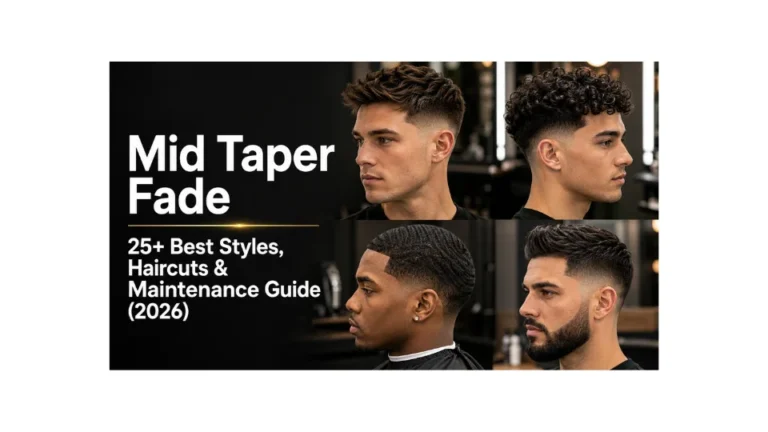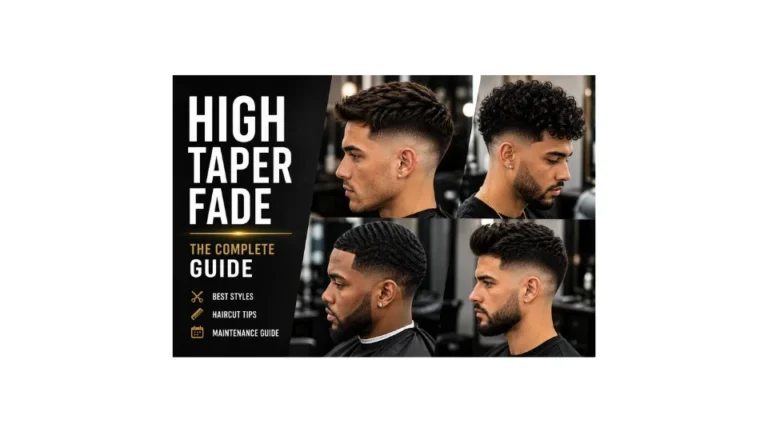
Low Taper Fade: The Complete Guide
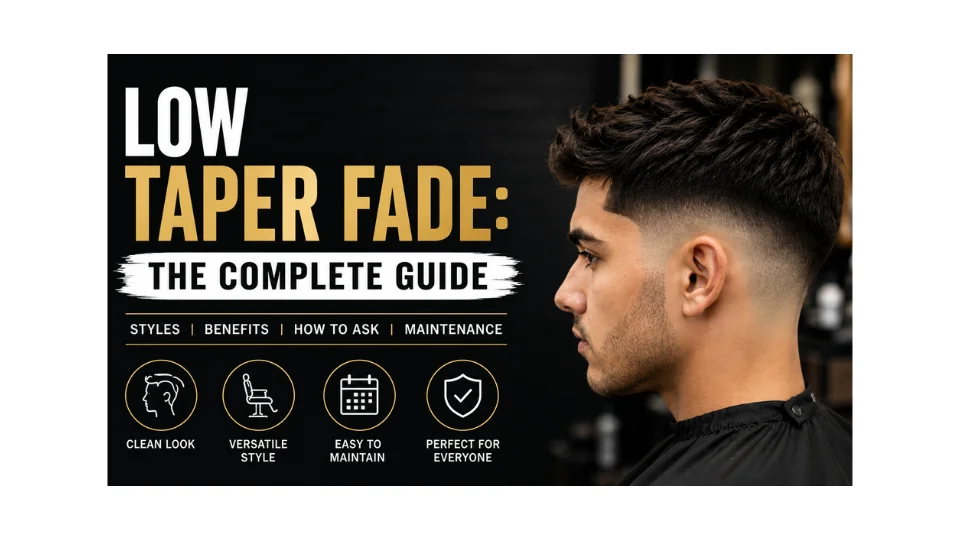
Everything you need to know about the most requested men’s haircut of the decade — styles, comparisons, home maintenance, and how to get it right every time.
The low taper fade has become one of the most requested men’s haircuts in the world, and for good reason. It blends clean, low-maintenance grooming with enough versatility to suit almost any hair type, face shape, and lifestyle.
This guide covers what a low taper fade actually is, how it compares to every other major fade style, more than 20 named variations you can bring to your barber, and the exact home-maintenance routine that keeps it sharp between visits. Whether you’re getting your first low taper fade or refining the one you already have, everything you need is below.
What Is a Low Taper Fade?
A low taper fade is a haircut where the hair gradually blends shorter near the ears and neckline while the sides and top stay longer. The fade line starts low — right around the natural hairline — which creates a soft, natural transition instead of the sharp contrast you’d get from a mid or high fade.
A taper and a fade are technically two different techniques. A taper gradually shortens hair without necessarily reaching the skin, while a fade blends hair down to the skin or a very short guard length. A low taper fade combines both: the tapering technique, applied at a low starting point, finished with a fade blend.
Because it preserves more length and texture than higher fades, the low taper fade works with nearly every face shape, hair texture, and occasion — from the office to the gym to a night out.
Fade Anatomy: Guard Numbers and Neckline Styles
Before you sit in the chair, it helps to know the vocabulary barbers actually use — this is also the fastest way to avoid leaving with the wrong fade height.
Clipper Guard Numbers, Explained
| Guard Number | Approx. Length | Typical Use |
| 0 / Skin | 0 mm (bald) | Skin fade finish, hairline outline |
| 0.5 – 1 | 1.5 – 3 mm | Shadow fade, very close blend |
| 1.5 – 2 | 4.5 – 6 mm | Standard low taper fade blend zone |
| 3 – 4 | 9.5 – 13 mm | Transition length into the taper |
| 5 and up | 16 mm+ | Length retained on top/sides |
Neckline Styles
- Tapered neckline — grows out naturally, lowest maintenance option.
- Rounded neckline — soft curve, common on low tapers for a natural look.
- Blocked neckline — sharp, straight line; needs touch-ups every 2 weeks to stay crisp.
- Disconnect — a deliberate gap in length between two sections, often used with textured tops.
- Hairline design — a shaved line, part, or pattern cut into the fade for extra detail.
When you book your appointment, specifying both the guard number and the neckline style is the single easiest way to make sure your barber delivers exactly what you have in mind.
Low Taper Fade vs. Every Other Fade Style
“Fade” covers a lot of ground. Here’s how the low taper fade stacks up against the styles it gets confused with most.
| Fade Type | Where It Starts | Contrast Level | Best For |
| Low Taper Fade | Near the ears / neckline | Low – subtle | Everyday, professional settings |
| Mid Taper Fade | At the temples | Medium | More definition without going bold |
| High Taper Fade | Near the crown | High – bold | Statement looks, thicker hair on top |
| Skin Fade | Varies (any height) | Very high near the fade line | Sharp, modern finish at any height |
| Bald Fade | Varies, fades to 0 | Very high | Maximum contrast, minimal upkeep on sides |
| Drop Fade | Curves down behind the ear | Medium – high | Added dimension, rounder head shapes |
| Burst Fade | Curves around the ear only | Medium | Shorter styles, mullets, fringes |
| Temp Fade (Temple Fade) | Just at the temples/hairline | Low – medium | Subtle cleanup without a full fade |
| Regular Fade | No fixed height | Depends on barber | General term — always specify height |
Low Taper Fade vs. Mid Taper Fade
A mid taper fade starts blending around the temples, creating more contrast between the top and sides. A low taper fade begins near the ears and neckline, giving a softer, more natural finish that suits every day wear.
Low Taper Fade vs. High Taper Fade
A high taper fade blends much higher on the head for a bold, eye-catching look. A low taper fade stays subtle and professional, and it grows out more evenly, which means fewer touch-ups.
Low Taper Fade vs. Skin Fade
A skin fade describes how short the hair gets — down to the skin — while a low taper fade describes where the fade begins. You can combine both by asking for a low taper that fades to skin for a clean, modern finish.
Low Taper Fade vs. Bald Fade
A bald fade always finishes at 0 guard, no matter where it starts. A low taper fade can finish at skin or stop at a short guard length — it’s the starting point, not the ending point, that defines it.
Low Taper Fade vs. Drop Fade
A drop fade curves downward behind the ear, following the shape of the skull for extra dimension. A low taper fade keeps a straighter, more even line. The two can be combined for a “low drop taper fade.”
Low Taper Fade vs. Burst Fade
A burst fade curves only around the ear, leaving the back longer — it’s common on mullets and fringes. A low taper fade wraps evenly around the entire head at a lower height.
Low Taper Fade vs. Temp Fade
A temp (temple) fade is a light cleanup limited to the hairline and temples, often paired with longer styles. A low taper fade covers more of the head with a fuller blend down to the neckline.
Low Taper Fade vs. Regular Fade
“Regular fade” isn’t a fixed style — it depends entirely on the barber’s default. Asking specifically for a low taper fade, with a guard number and neckline style, ensures a consistent result every time you book.
A Brief History of the Low Taper Fade
Fade haircuts trace back decades in barbering, with low, tapered blends historically favored in military and classic barbershop cuts for their clean, professional appearance. The modern “low taper fade” as a named trend exploded over the last ten years, driven largely by social media before-and-after transformation videos.
More recently, the style crossed into pop culture in an unexpected way: a viral moment referencing a streamer’s haircut turned “low taper fade” into an internet meme, introducing the term to an audience far beyond barbershops. Meme aside, the underlying haircut has stayed one of the most consistently requested styles worldwide because it simply works — clean, versatile, and easy to maintain.
22+ Low Taper Fade Styles by Hair Type and Look
The low taper fade isn’t one fixed haircut — it’s a technique that adapts to your hair texture and the style you build on top. Below is a full breakdown, starting with hair type and moving into named style variations.
By Hair Type
Low Taper Fade for Straight Hair
On straight hair, a low taper fade creates a clean, well-defined finish because the hair naturally lies flat. It pairs perfectly with a side part, quiff, or comb-over. Keeping extra length on top gives more styling options; a shorter top offers a low-maintenance routine. Product tip: a light-hold pomade keeps straight hair controlled without looking stiff.
Low Taper Fade for Curly Hair
A low taper fade enhances natural curls by keeping the sides clean while adding shape and volume on top. The right length defines curls without making the style look bulky. Product tip: a curl-defining cream applied to damp hair keeps definition all day.
Low Taper Fade for Wavy Hair
For wavy hair, a low taper fade highlights natural movement while keeping the sides neat. It pairs well with textured crops and messy fringes. Product tip: a sea salt spray adds texture and hold without weighing the waves down.
Low Taper Fade for Afro and 4C Hair
A low taper fade creates a sharp, structured look that complements the natural volume of Afro and 4C hair. The subtle fade grows out smoothly and looks even sharper paired with a crisp line-up. Product tip: a hydrating oil or curl cream maintains moisture and definition between wash days.
Low Taper Fade for Thin or Fine Hair
Thin and fine hair benefit from a slightly higher taper start and a shorter top, which reduces the appearance of thinning and avoids a flat, flyaway look. A lightweight thickening spray adds the illusion of density without weighing hair down — heavy creams and pomades should be avoided.
Named Style Variations
Bring any of these names directly to your barber for a precise result.
Low Taper Fade Mullet
Clean sides with longer length retained at the back for a modern, retro-inspired look. Pairs well with a texture clay for a defined, matte finish on top.
Low Taper Fade Blowout
The top is blow-dried for extra height and volume while the sides stay tightly faded. A thickening spray before blow-drying maximizes lift.
Low Taper Fade with Textured Fringe
A choppy, forward-styled fringe contrasts with the clean low fade underneath. Best finished with a small amount of matte clay for separation.
Low Taper Fade Man Bun
Short, clean sides that fade near the ears while the top stays long enough to tie back. A light styling cream smooths flyaways before tying.
Low Taper Fade Pompadour
Short sides fading softly into a long, voluminous top swept upward and back. Requires a stronger-hold pomade to maintain height through the day.
Low Taper Fade Edgar
A blunt, straight-across fringe combined with a low fade and sharp line-up. Works best on straight or wavy hair for a crisp edge.
Low Taper Fade Slick Back
Timeless sharpness — the top is combed straight back and held in place, with the fade doing the contrast work underneath.
Low Taper Fade Comb Over
A classic side part with the longer side combed across. One of the most versatile options for professional settings.
Low Taper French Crop
A short, textured fringe with a low fade on the sides. Popular for its low-maintenance, no-fuss styling.
Low Taper Fade Undercut
A more dramatic contrast between a very short faded side and noticeably longer top, without going as high as a mid or high fade.
Low Taper Fade Mohawk
The sides fade low and tight while the center strip is left long, offering a bolder statement without an aggressive fade height.
Low Taper Fade with Braids
Braided sections on top connect into a clean low fade on the sides, keeping the style neat as it grows out.
Low Taper Fade with Dreads
Locs or dreads are left full on top while the sides and neckline stay sharply faded low for contrast and definition.
Low Taper Burst Fade
The fade curves around the ear only, commonly paired with mullets or fringes for extra dimension at the back.
Low Taper Skin/Bald Fade
The low taper starts at the same low point but blends all the way down to the skin for maximum sharpness at the fade line.
Low Taper Drop Fade
The fade line curves downward behind the ear, following the natural curve of the skull for added dimension.
Low Taper Fade with a Perm
A chemical perm adds curl pattern and volume on top, while the low fade keeps the sides clean and manageable.
Low Taper Fade with Waves (360)
Popular in Waves culture — brushing routines create the wave pattern on top while the low fade keeps the perimeter sharp.
Low Taper Fade Middle Part
A precise center part divides the top into two sections, paired with a low, subtle fade for a modern, balanced look.
Low Taper Fade Crew Cut
Short, uniform length on top fading into a low, clean blend on the sides — one of the lowest-maintenance combinations available.
Low Taper Fade with a Beard
The fade blends seamlessly into a well-shaped beard for a connected, masculine look that’s easy to maintain together.
Low Taper Fade with Hairline Design
A shaved line, part, or pattern is cut into the fade itself for a personalized, detailed finish.
How to Style a Low Taper Fade at Home
- Prep: Wash with a lightweight shampoo and towel-dry until hair is damp, not wet.
- Apply product: Choose based on your hair type and desired finish — clay for a matte, textured look; pomade for shine and control; sea salt spray for volume and texture; cream for curl definition.
- Blow-dry or diffuse: Direct airflow upward at the roots for lift, or downward and flat for a sleeker finish. Curly and wavy types should use a diffuser on low heat.
- Finish and set: Comb or finger-style into place, and use a light-hold spray only if you need extra hold through a long day.
Recommended Products and Tools
A short list covers almost every low taper fade variation above:
- Cordless clippers with adjustable guard settings — for touch-ups between barber visits.
- A fade comb — essential for guiding clippers and catching stray hairs during blending.
- Matte texture clay — for defined, non-shiny finishes (crops, fringes, textured tops).
- Light-hold pomade — for slick backs, comb-overs, and pompadours that need shine and control.
- Sea salt spray — for texture and volume on wavy and straight hair.
- Leave-in conditioner or hydrating oil — keeps curly, coily, and longer hair manageable between washes.
Low Taper Fade Maintenance Calendar
| Timeframe | What to Expect | What to Do |
| Days 1–5 | Fade line is at its sharpest. | Style as normal; avoid heavy products that soften the fade line. |
| Days 6–10 | Neckline and sideburns start showing regrowth. | A quick at-home trim around the neckline keeps it looking fresh. |
| Days 11–14 | Fade blend starts to soften. | Book a touch-up if you prefer a consistently sharp line. |
| Week 3+ | Fade grows out into a fuller taper. | This is the natural point for your next full barber visit. |
Outside of touch-ups, wash your hair two to three times a week to avoid product buildup, and brush or comb daily to maintain shape. A leave-in conditioner reduces frizz and keeps longer sections healthy between visits.
Which Low Taper Fade Matches Your Lifestyle?
- Professional / Office: Comb over, slick back, or classic crew cut — polished and low-fuss.
- Gym / Active: Skin or bald low taper fade, crew cut — minimal styling required post-workout.
- Creative / Trendsetter: Textured fringe, mullet, or hairline design — more room for personal expression.
- Low-Maintenance / Minimalist: French crop or buzz cut with a low taper fade — quick to style, quick to maintain.
Low Taper Fade by Face Shape
- Round face: Add height on top (pompadour, blowout) to elongate the face.
- Oval face: Nearly every variation works — this is the most flexible face shape for a low taper fade.
- Square face: Softer, textured tops reduce sharp angles; avoid overly blunt fringes.
- Diamond face: Fringes and textured crops balance a narrower forehead and chin.
- Long/rectangular face: Keep more width on the sides and avoid excessive height on top.
- Heart face: A textured fringe or side part softens a wider forehead.
How Much Does a Low Taper Fade Cost?
Pricing depends on your location, your barber’s experience level, and any add-ons like a beard trim or hairline design. Most barbershops price it in line with a standard men’s haircut, with premium shops charging more for detailed line-ups or design work. Booking a touch-up every three to four weeks is the most cost-effective way to keep the style looking sharp year-round.
How to Ask Your Barber for a Low Taper Fade
Be specific: state that you want the fade to start low, near the ears and neckline, and specify a guard number for the blend zone. Mention the neckline style you want (tapered, rounded, blocked, or disconnected) and whether you want a soft blend or a full skin fade finish.
Bring a reference photo from multiple angles — front, side, and back. It’s the fastest way to eliminate any miscommunication about fade height, top length, and finish.
Is the Low Taper Fade Still Trending in 2026?
Yes — the low taper fade remains one of the strongest haircut trends because it functions as a versatile foundation rather than a passing fad. This year, barbers are pairing it with longer textured tops, natural curls, soft waves, and well-shaped beards, favoring a relaxed, natural finish over heavily gelled looks, while keeping the signature low fade clean and sharp.
Common Mistakes to Avoid
- Waiting too long between haircuts, which lets the fade lose its clean definition.
- Using heavy styling products on the sides, which can make the cut look flat or greasy.
- Not specifying the fade height clearly, which often results in a mid or high fade instead.
- Skipping neckline touch-ups, which is usually the first part of the cut to grow out visibly.
Frequently Asked Questions
What does a low taper fade look like?
A low taper fade keeps most of the hair’s length on the top and sides while blending shorter around the ears and neckline, creating a clean, natural, professionally finished look.
Is a low taper fade good for work or job interviews?
Yes. Its soft, low-contrast appearance is one of the most workplace-friendly fade styles, and it stays neat as it grows out.
How often should you get a low taper fade?
Most men need a touch-up every three to four weeks. Its subtle blend grows out more naturally than higher fades.
Can you get a low taper fade with any hair type?
Yes — it works with straight, wavy, curly, coily, and Afro-textured hair, customized to enhance your natural texture.
What’s the difference between a taper and a low taper fade?
A taper gradually shortens hair without necessarily reaching the skin. A low taper fade blends the hair down to the skin or a very short length, starting low around the ears and neckline.
Should you bring a reference photo?
Yes. It helps your barber understand the exact fade height, top length, and finish you want, and avoids miscommunication.
Do all barbers cut a low taper fade the same way?
Not always. Clearly stating your preferred guard number, fade height, and neckline style ensures consistent results across different barbers.
Is a low taper fade good for thinning hair?
Yes. The low blend draws less attention to a receding hairline or thinning areas while creating a fuller, more balanced appearance.
What guard number is used for a low taper fade?
The blend zone typically uses a 1.5–2 guard, transitioning up to a 3–4 guard, though exact numbers vary by barber and desired contrast.
What’s the best neckline for a low taper fade?
A tapered or rounded neckline is lowest-maintenance since it grows out naturally; a blocked neckline looks sharper but needs touch-ups roughly every two weeks.
What products work best for styling a low taper fade?
Matte clay for texture, pomade for shine and hold, sea salt spray for volume, and curl cream for curly types — choice depends on hair type and desired finish.
Can I maintain a low taper fade myself at home?
Basic neckline and sideburn touch-ups can be done at home with cordless clippers and a fade comb, but the blend itself is best maintained by a barber every 3–4 weeks.
How do I grow out a low taper fade?
Space out visits to every 5–6 weeks and ask your barber to blend the growing sides into the top gradually rather than re-cutting the fade line each time.
Is the low taper fade out of style in 2026?
No — it remains one of the most requested cuts, with barbers currently pairing it with more natural, textured tops rather than heavily styled finishes.
What’s the difference between a low taper fade and a low fade?
“Low fade” is a broader term describing any fade that starts low, while a “low taper fade” specifically combines the tapering technique with that low starting point for a softer transition.
Final Thoughts
The low taper fade remains one of the most popular men’s haircuts because it’s clean, versatile, and easy to maintain across virtually any hair type and face shape. Whether you pair it with curls, waves, a beard, a mullet, or a sharp hairline design, understanding the guard numbers, neckline styles, and maintenance routine above will help you walk into any barbershop and walk out with exactly the cut you asked for.